Sunday, 31 January 2010

Storyboard

This is the storyboard that we made for our film opening:

Part 1:


Part 2:

Monday, 25 January 2010

Thursday, 14 January 2010

Story

Initial story idea

Opening: Alex in his room
Tim in kitchen
Alex: Shuts his door and heads down the stairs, leaves the house.
Tim goes up the stairs into Alex’s room and starts looking for something. He opens a set of draws and finds lots of newspaper cuttings of recent murders in the area and a knife with blood on it.
Whilst the above is happening, Alex realises he’s forgotten his phone and heads back to the house. (This will be done by switching camera shots between Alex and Tim, to create more tension)
Tim hears the door opening and hears Alex start to climb the stairs. He forgets to shut the draw of newspaper cuttings and only just has time to hide in a cupboard.
Tim notices the open draw and then sees his cupboard slightly open.
Tim inside starts to panic as he sees Alex approaching the cupboard door (through the crack between the two doors)
Alex opens the doors and you see them opening from Tim’s perspective.

The film ends


Padded Version

Film starts with Tim washing up, with a shot of the front door behind him.

You see Alex walk out the front door without saying anything and shutting it behind him.

Tim waits a few seconds before heading up the stairs into Alex’s room and starts looking for something. He opens a set of draws and finds a knife.

(The film is going to be shot in two parts. One part following Tim, the other part following Alex)

Whilst Tim is searching Alex's room, Alex realises he’s forgotten his phone and heads back to the house. (This will be done by switching camera shots between Alex and Tim, to create more tension)
Tim is holding the knife in shock when he hears the front door opening and hears Alex starting to climb the stairs.

Tim panics looks around the room.

Alex opens the door and walks across the room noticing the knife, which has been left on the table.

He picks up the knife and starts searching his room for Tim. He heads towards the wardrobe (this is going to be shot, using a camera shot from inside the wardrobe)

The film ends with Alex heading towards the wardrobe, holding the knife. As soon as he opens the door the film ends.

Wednesday, 13 January 2010

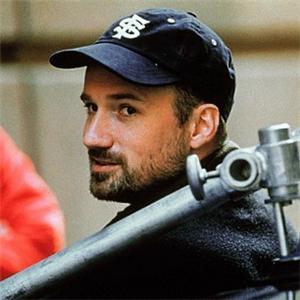
David Fincher


David Andrew Leo Fincher (born August 28, 1962), is an Academy Award-nominated American filmmaker and music video director, he is most known for his dark and stylish thriller movies, such as Se7en (1995), The Game (1997), Fight Club (1999), and Zodiac (2007).

One of the more renowned successes he directed was the film Se7en, based on a screenplay by Andrew Kevin Walker, told the story of two detectives (played in the movie by Brad Pitt and Morgan Freeman) tracking down a serial killer (Kevin Spacey) who bases his killings on the seven deadly sins. The film grossed more than $100 million domestically (over $300 million internationally).[3] The chairman of New Line Cinema, Arnold Kopelson, originally refused to allow filming of the shocking climactic scene. With the aid of Brad Pitt, who stated that he would not be involved with the picture if its ending were changed, Fincher was allowed to film the original scene and use it in the final cut.

Monday, 11 January 2010

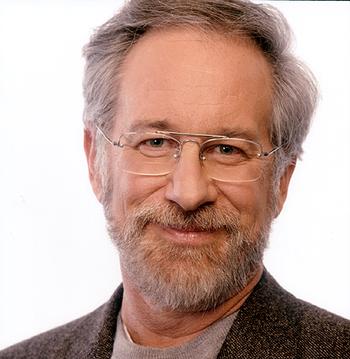
Steven Spielberg

Steven Spielberg

Spielberg at the Pentagon (August 11, 1999).
Born Steven Allan Spielberg
December 18, 1946 (1946-12-18) (age 63)
Cincinnati, Ohio, U.S.
Occupation Film director, producer, screenwriter
Years active 1964 – present


Steven Allan Spielberg, KBE (born December 18, 1946)[1] is a Jewish American film director, screenwriter, and film producer. In a career spanning over four decades, Spielberg's films have taken up many themes and genres. Spielberg's early sci-fiction and adventure films

After watching the unconventional, off-center camera techniques of Jaws, an aging Alfred Hitchcock praised "young Spielberg," saying "He's the first one of us who doesn't see the proscenium arch." Or, to paraphrase, he was the first mainstream director to visually think outside the spatial dynamics of the theater.